
 Sign in with Google
US FDA Organizational Structure
Overview
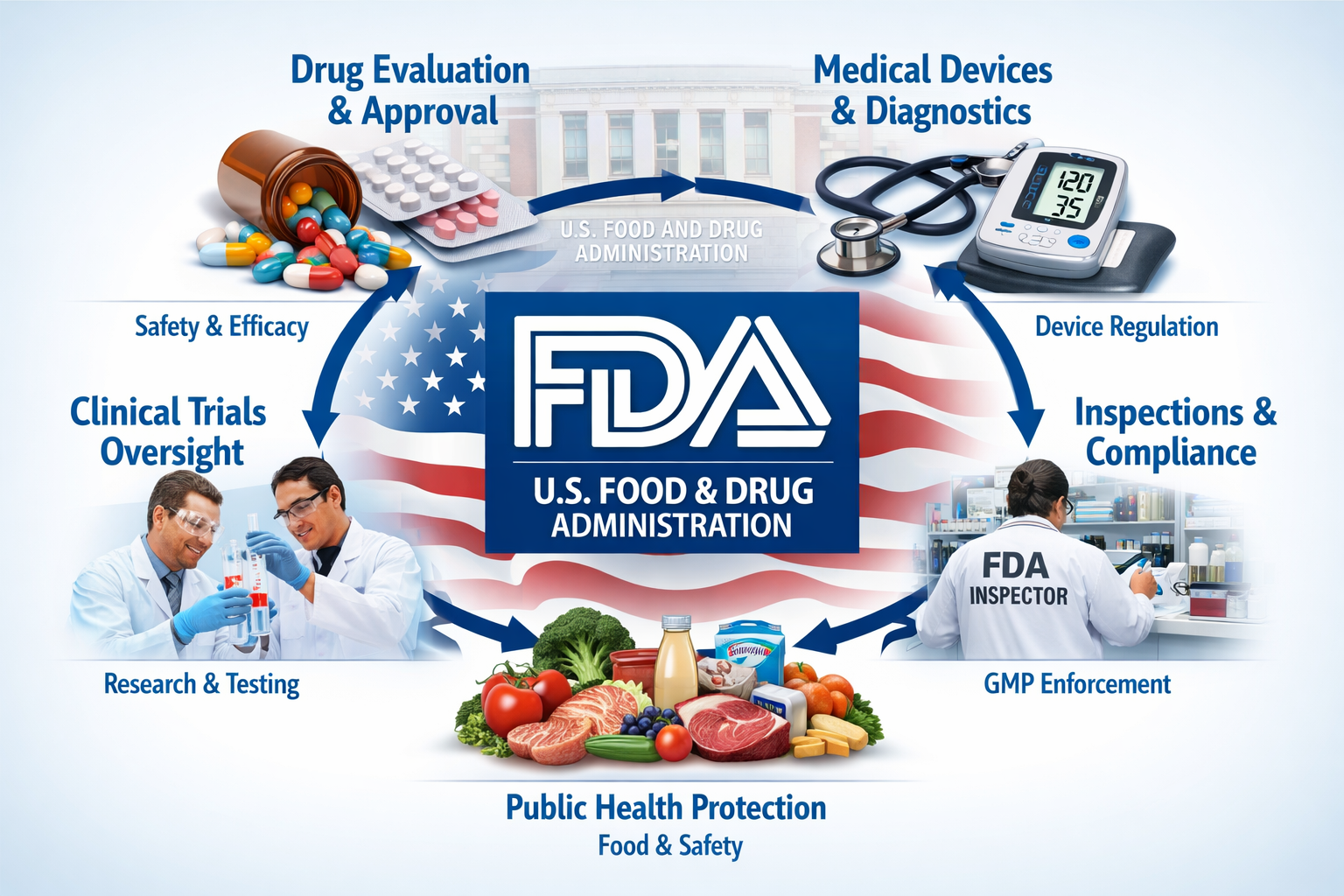
The U.S. Food and Drug Administration (FDA) operates under the U.S. Department of Health and Human Services. Its primary mission is to protect public health by ensuring the safety, efficacy, quality, and security of regulated products, including human drugs, biologics, medical devices, food, cosmetics, veterinary products, and tobacco products.
The FDA follows a centralized leadership model supported by specialized scientific centers and operational offices. This structure allows the agency to combine scientific evaluation, regulatory oversight, and enforcement activities to ensure public health protection.
Leadership Structure
| Position | Primary Responsibility |
|---|---|
| Commissioner of Food and Drugs | Provides overall leadership, strategic direction, and final regulatory authority |
| Deputy Commissioners | Oversee major operational, scientific, and administrative functions |
| Office of the Chief Counsel | Provides legal interpretation and supports enforcement actions |
| Office of the Chief Scientist | Promotes regulatory science and coordinates scientific policy |
Major Product-Based Centers
| Center | Regulatory Scope |
|---|---|
| Center for Drug Evaluation and Research (CDER) | Regulates human pharmaceutical drugs, including INDs, NDAs, ANDAs, and post-marketing surveillance |
| Center for Biologics Evaluation and Research (CBER) | Oversees vaccines, blood products, gene therapies, and cell-based products |
| Center for Devices and Radiological Health (CDRH) | Regulates medical devices and radiation-emitting products |
| Center for Food Safety and Applied Nutrition (CFSAN) | Ensures safety of food, dietary supplements, and cosmetics |
| Center for Veterinary Medicine (CVM) | Regulates animal drugs and medicated feed |
| Center for Tobacco Products (CTP) | Oversees tobacco product regulation and risk reduction policies |
Office of Regulatory Affairs (ORA)
The Office of Regulatory Affairs serves as the primary field enforcement arm of the FDA. It is responsible for inspections, compliance activities, and enforcement actions across the United States and at international points of entry.
| Division | Function |
|---|---|
| Inspection and Compliance | Conducts facility inspections and enforces GMP, GLP, and GCP regulations |
| Import and Export Operations | Oversees international product movement and border compliance |
| Investigations and Enforcement | Addresses violations and coordinates regulatory actions |
Administrative and Support Offices
| Office | Responsibility |
|---|---|
| Office of Policy, Legislation, and International Affairs | Develops regulatory policy and manages international collaboration |
| Office of Management | Handles finance, human resources, and administrative planning |
| Office of Digital Transformation | Manages IT infrastructure and electronic regulatory systems |
Advisory Committees
| Component | Purpose |
|---|---|
| External Expert Panels | Provide independent scientific recommendations on complex or high-risk regulatory decisions |
Advisory committees enhance transparency, objectivity, and scientific integrity in the regulatory decision-making process.
Field and Inspection Structure
| Unit | Key Activity |
|---|---|
| Regional and District Offices | Conduct inspections and compliance oversight |
| FDA Laboratories | Perform product testing and scientific analysis |
| Border Inspection Units | Monitor imported regulated products |
These field units ensure nationwide enforcement and continuous surveillance of regulated products.
Organizational Model Summary
| Functional Division | Role |
|---|---|
| Product-Based Scientific Centers | Evaluate and approve regulated products |
| Operations and Enforcement Offices | Conduct inspections and ensure compliance |
| Policy and Legal Units | Develop regulations and provide governance support |
The FDA’s organizational framework integrates scientific evaluation, enforcement oversight, and regulatory governance. This structure enables the agency to protect public health effectively while supporting innovation and the safe introduction of new medical products
