
 Sign in with Google
Lifecycle Planning
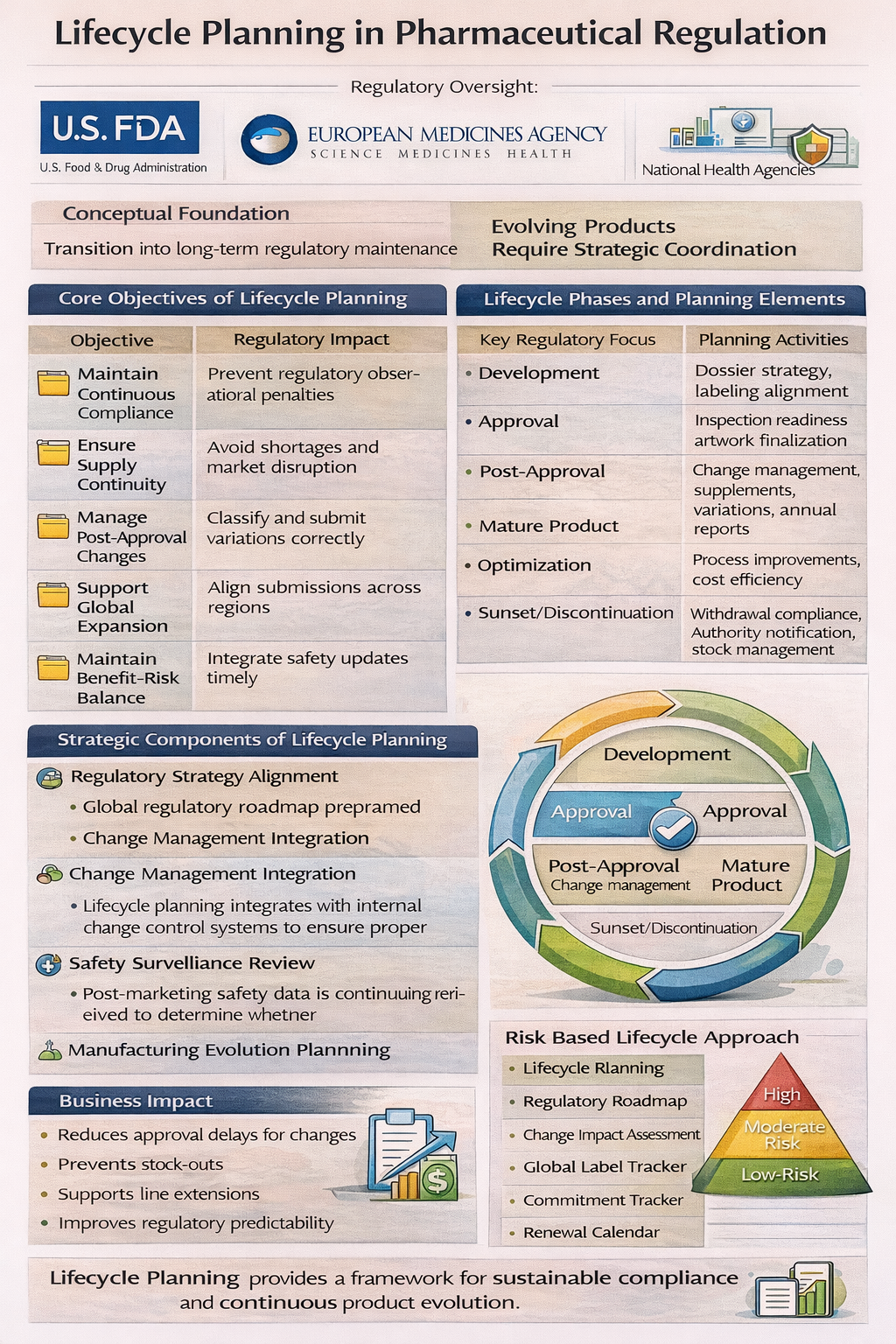
Lifecycle Planning in pharmaceutical regulatory affairs refers to the proactive, structured strategy developed to manage a medicinal product from development through commercialization, post-approval maintenance, and eventual discontinuation. It integrates regulatory, quality, safety, manufacturing, and commercial considerations to ensure sustained compliance and uninterrupted market presence across multiple jurisdictions.
Lifecycle planning is overseen by regulatory authorities such as the U.S. Food and Drug Administration and the European Medicines Agency, but its execution is the responsibility of the Marketing Authorization Holder.
Conceptual Foundation
Lifecycle planning is built on the principle that product approval is not the end of regulatory responsibility. Instead, it marks the transition into long-term regulatory maintenance. Every product is expected to evolve due to manufacturing improvements, safety findings, market expansion, and technological upgrades.
Core Objectives of Lifecycle Planning
| Objective | Regulatory Impact |
|---|---|
| Maintain Continuous Compliance | Prevent regulatory observations and penalties |
| Ensure Supply Continuity | Avoid shortages and market disruption |
| Manage Post-Approval Changes | Classify and submit variations correctly |
| Support Global Expansion | Align submissions across regions |
| Maintain Benefit–Risk Balance | Integrate safety updates timely |
Lifecycle Phases and Planning Elements
| Phase | Key Regulatory Focus | Planning Activities |
|---|---|---|
| Development | Submission readiness | Dossier strategy, labeling alignment |
| Approval | Market authorization | Inspection readiness, artwork finalization |
| Post-Approval | Change management | Supplements, variations, annual reports |
| Mature Product | Optimization | Process improvements, cost efficiency |
| Sunset/Discontinuation | Withdrawal compliance | Authority notification, stock management |
Strategic Components of Lifecycle Planning
Regulatory Strategy Alignment
A global regulatory roadmap is prepared to define submission pathways, reference countries, bridging strategies, and harmonization plans.
Change Management Integration
Lifecycle planning integrates with internal change control systems to ensure proper classification of variations such as Prior Approval Supplements, CBE changes, Type IA/IB/II variations, and renewals.
Safety Surveillance Integration
Post-marketing safety data is continuously reviewed to determine whether labeling updates or risk minimization measures are required.
Manufacturing Evolution Planning
Technology transfers, site additions, equipment modernization, and specification tightening are pre-assessed for regulatory impact before implementation.
Global Coordination
For multinational products, lifecycle planning must coordinate submissions across regions to avoid divergence in labeling and CMC data. Differences in implementation timelines between US and EU systems require structured planning to maintain harmonized product information.
Risk-Based Lifecycle Approach
Modern lifecycle planning applies Quality Risk Management principles to prioritize high-impact changes. The probability and severity of regulatory risk determine submission timelines and authority engagement strategy.
Lifecycle Documentation Structure
| Document | Purpose |
|---|---|
| Regulatory Roadmap | Defines submission and expansion plan |
| Change Impact Assessment | Determines reporting category |
| Global Label Tracker | Maintains alignment across markets |
| Commitment Tracker | Monitors post-approval obligations |
| Renewal Calendar | Tracks authorization validity |
Inspection Perspective
During regulatory inspections, authorities assess whether lifecycle planning is proactive or reactive. Evidence of structured change evaluation, timely submission, and cross-functional coordination reflects a mature compliance system.
Business Impact
Effective lifecycle planning reduces approval delays for changes, prevents stock-outs, supports line extensions, improves regulatory predictability, and enhances company credibility with health authorities.
Lifecycle Planning therefore represents a forward-looking regulatory governance system that ensures long-term product sustainability, compliance continuity, and strategic growth across global markets.
