 Sign in with Google
Understanding One-to-Many Relationship Between Orders and OrderDetails
Understanding One-to-Many Relationship Between Orders and OrderDetails
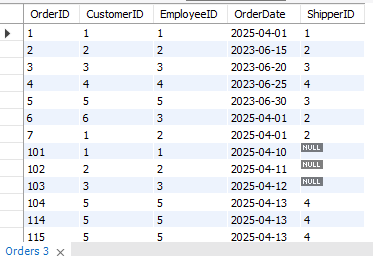
Orders Table:
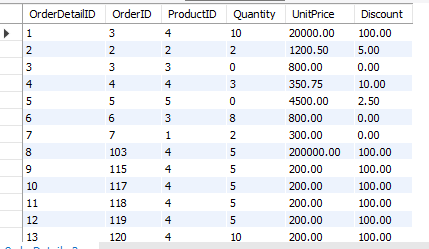
OrderDetails Table:
Query Explanation:
● There is a One-to-Many relationship between Orders and OrderDetails – one order can have multiple order detail entries.
● The OrderID in the OrderDetails table acts as a foreign key, referencing the OrderID in the Orders table.
● This follows proper normalization practices (typically 2NF), where details like quantity and unit price are separated from the order header.
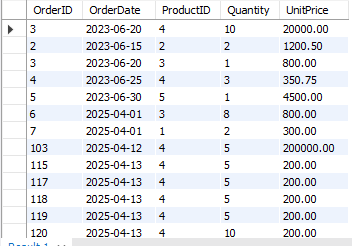
● The INNER JOIN is used to combine rows from both tables where the OrderID matches, returning complete details of each product in the order.
SQL Query:
-- Creating Orders table
CREATE TABLE Orders (
    OrderID INT PRIMARY KEY,
    CustomerID INT,
    OrderDate DATE
);

-- Creating OrderDetails table with foreign key referencing Orders
CREATE TABLE OrderDetails (
    OrderDetailID INT PRIMARY KEY,
    OrderID INT,  -- Foreign key to establish One-to-Many relationship
    ProductID INT,
    Quantity INT,
    UnitPrice DECIMAL(10,2),
    FOREIGN KEY (OrderID) REFERENCES Orders(OrderID)
);

-- Joining Orders and OrderDetails to fetch complete order info
SELECT
    Orders.OrderID,
    Orders.OrderDate,
    OrderDetails.ProductID,
    OrderDetails.Quantity,
    OrderDetails.UnitPrice
FROM
    Orders
INNER JOIN
    OrderDetails ON Orders.OrderID = OrderDetails.OrderID;
Output: