 Sign in with Google

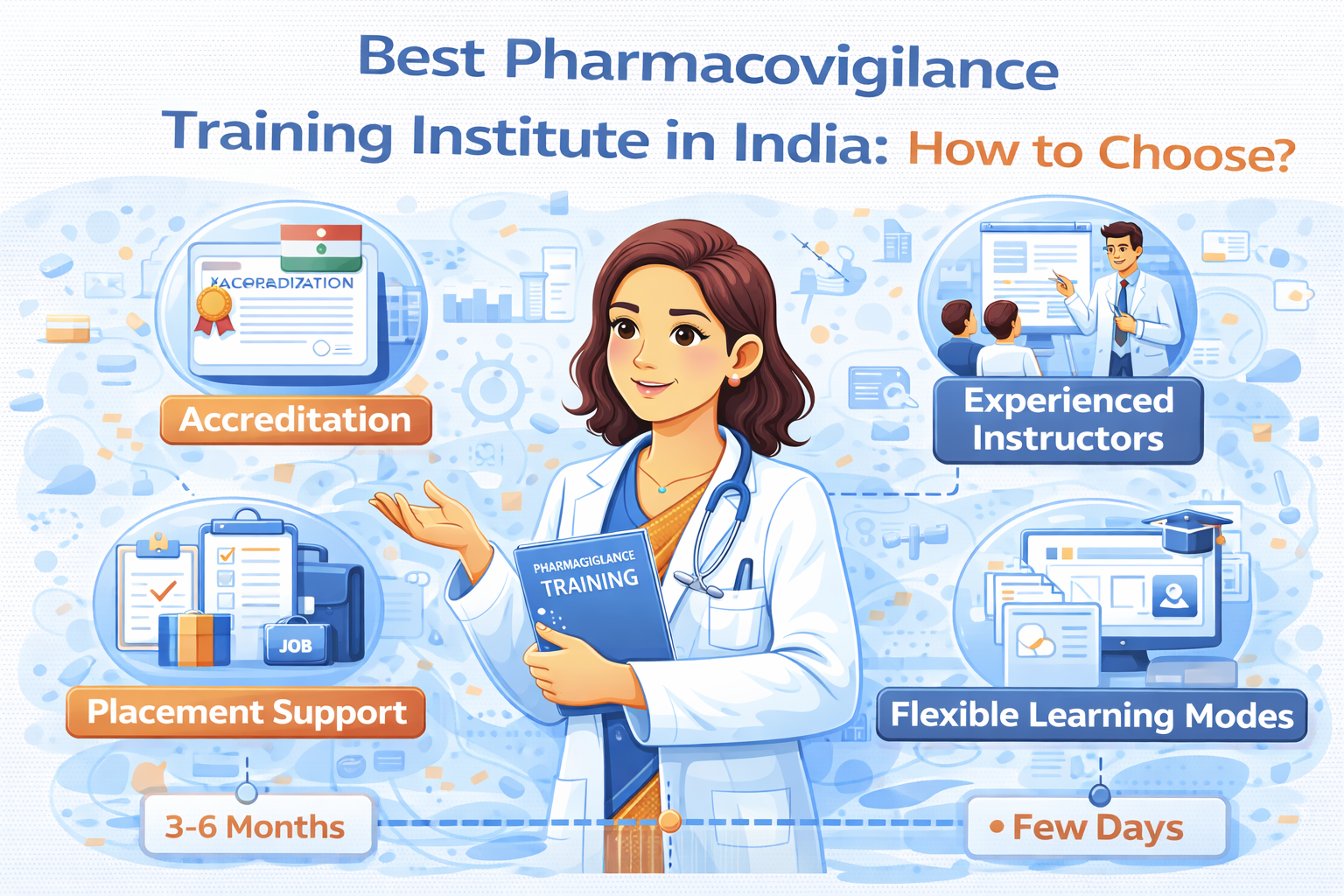
Which is the Best Pharmacovigilance Training Institute in India: How to Choose?
Pharmacovigilance is no longer a “backup career option.” It is one of the fastest-growing domains in the pharmaceutical, biotech, and CRO industries. With global drug safety regulations tightening every year, the demand for trained professionals in pharmacovigilance has increased significantly.
But here’s the real challenge.
There are hundreds of institutes claiming to offer the best pharmacovigilance training in India. Websites look polished. Brochures sound impressive. Promises are bold.
So how do you actually choose the best pharmacovigilance training institute in India?
Let’s break it down strategically.
Why Choosing the Right Pharmacovigilance Training Institute Matters?
Pharmacovigilance is a highly regulated, compliance-driven field. Companies expect candidates to understand:
-
ICSR case processing
-
Validity assessment
-
Seriousness criteria
-
MedDRA coding
-
Narrative writing
-
Aggregate reporting (PSUR, PBRER, DSUR)
-
Signal detection basics
-
Regulatory timelines
A superficial course will not prepare you for real interviews or real projects.
A strong pharmacovigilance training program bridges the gap between theory and industry expectations.
1. Curriculum Depth: Is It Industry-Oriented or Just Theoretical?
The best pharmacovigilance training institute in India should offer:
-
End-to-end ICSR lifecycle training
-
Real case scenarios and narrative drafting
-
Hands-on exposure to safety databases (conceptual understanding at minimum)
-
Regulatory guidelines (ICH, GVP, FDA basics)
-
Mock case processing exercises
-
Interview preparation modules
If the syllabus does not include practical case studies, it is incomplete.
At ThePharmaDaily, the focus of our pharmacovigilance training is practical exposure, structured case discussions, and real-world documentation understanding—not just PowerPoint slides.
2. Faculty Background: Are They Real Industry Experts?
Many institutes hire trainers who have limited industry exposure.
Before enrolling, check:
-
Do trainers have actual pharmacovigilance experience?
-
Have they worked on live projects?
-
Do they understand regulatory audits?
-
Can they guide on interview questions with real examples?
Strong pharmacovigilance training must be led by professionals who understand real compliance pressure, not just textbook definitions.
At ThePharmaDaily, our pharmacovigilance training is designed by experienced professionals who have handled drug safety operations, ensuring students learn what companies actually expect.
3. Placement Support: Real Support or Just Marketing?
This is critical.
Ask these questions:
-
Do they conduct mock interviews?
-
Do they review your resume?
-
Do they guide on LinkedIn optimization?
-
Do they connect you with recruiters?
-
Do they provide job alerts?
A good pharmacovigilance training institute does not stop at teaching—it supports career transition.
ThePharmaDaily integrates structured placement mentoring into its pharmacovigilance training to help students confidently approach interviews in CROs, pharmaceutical companies, and global safety teams.
4. Practical Case-Based Learning
Pharmacovigilance is documentation-heavy. Without practice, you cannot master it.
The best pharmacovigilance training in India should include:
-
Detailed narrative writing exercises
-
Validity and seriousness determination
-
Day 0 calculation and regulatory timelines
-
Case follow-up logic
-
Literature case understanding
-
SUSAR basics
At ThePharmaDaily, our pharmacovigilance training emphasizes structured case-based learning so students develop analytical thinking rather than memorizing definitions.
5. Updated Content for 2026 and Beyond
The pharmacovigilance industry is evolving rapidly with:
-
AI-driven case triage
-
Automation in safety databases
-
Advanced signal detection tools
-
Risk management planning
An outdated curriculum is a red flag.
Modern pharmacovigilance training must include discussions on automation trends, regulatory updates, and digital transformation in drug safety.
ThePharmaDaily continuously upgrades its pharmacovigilance training modules to reflect industry expectations and technological advancements.
6. Reputation and Student Feedback
Search for:
-
Google reviews
-
LinkedIn testimonials
-
Alumni success stories
-
Placement screenshots
Transparent institutes proudly showcase student achievements.
ThePharmaDaily has built a strong reputation in pharmacovigilance training by focusing on practical clarity, interview readiness, and ethical guidance.
7. Red Flags to Avoid
Avoid institutes that:
-
Guarantee jobs instantly
-
Do not share a detailed syllabus
-
Avoid answering technical questions
-
Offer extremely short crash courses with unrealistic claims
-
Lack structured interview preparation
Pharmacovigilance is technical. Skill development takes structured effort.
8. The Most Important Point: Demand a Live Software Demo
This is non-negotiable.
Many institutes claim they will teach safety databases, AI tools, dashboards, or case processing platforms. But claiming and showing are two different things.
Only join a pharmacovigilance training institute if the trainers give you a live demo of the software and tools they promise to teach.
Do not rely on verbal assurances.
Before enrolling, insist on:
-
A live demonstration of the tools
-
A walkthrough of how case entry looks
-
A sample narrative drafting workflow
-
A preview of any dashboards or automation modules
If an institute cannot show you a real demo session, that is a red flag.
Professional pharmacovigilance training should be transparent. You deserve to see what you are paying for.
At ThePharmaDaily, transparency is central. Our pharmacovigilance training is structured with clarity about the tools, workflow simulations, and learning methodology so students know exactly what they will gain.
Never trust only words. Trust demonstrations.
Why ThePharmaDaily Stands Out?
When evaluating the best pharmacovigilance training institute in India, consider structured learning, mentorship, practical exposure, and career guidance together.
ThePharmaDaily’s pharmacovigilance training focuses on:
-
Comprehensive ICSR lifecycle training
-
Real case discussions
-
Regulatory framework clarity
-
Mock interviews
-
Resume building
-
Placement mentoring
-
Long-term career guidance
The aim is not just course completion—it is career transformation.
Conclusion
Choosing the best pharmacovigilance training institute in India is a strategic career decision. Do not rush it.
Evaluate curriculum depth. Check faculty credibility. Assess placement support. Ask practical questions. Compare wisely.
If you are serious about building a career in drug safety, explore structured and industry-oriented pharmacovigilance training that prepares you for real-world expectations.
The right training does not just teach pharmacovigilance.
It builds professionals ready for global drug safety roles.
And in a competitive job market, that difference matters.
Final Advice Before You Enroll
Before joining any pharmacovigilance training program:
-
Ask for a detailed syllabus.
-
Verify trainer experience.
-
Demand a live demo of software and tools.
-
Understand placement support clearly.
-
Compare logically, not emotionally.
Do not be impressed by promises. Be convinced by proof.
Choosing the right pharmacovigilance training institute in India is a career-defining decision. Make it strategically.
Because in pharmacovigilance, clarity is everything—and your training should reflect that.