 Sign in with Google

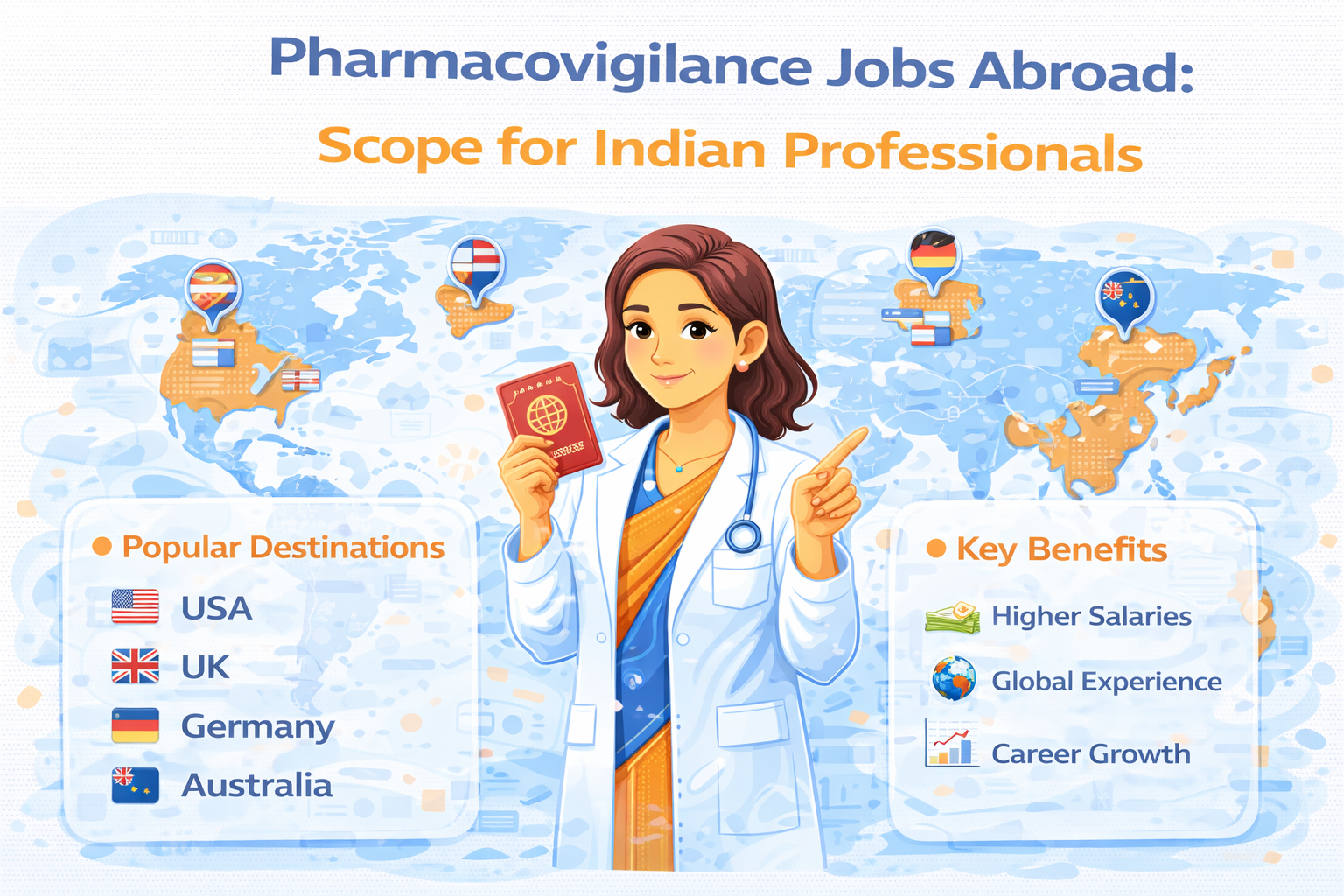
Pharmacovigilance Jobs Abroad: Scope for Indian Professionals
The pharmaceutical industry has become truly global. Clinical trials are multinational. Drug safety databases operate across time zones. Regulatory submissions move across continents within hours. In this interconnected ecosystem, pharmacovigilance professionals are no longer limited by geography.
For Indian pharmacy, life sciences, and medical graduates, pharmacovigilance jobs abroad are not just aspirational — they are achievable with the right strategy, structured learning, and internationally aligned skills.
If you are planning to transition from India to global drug safety roles, this detailed guide will help you understand scope, eligibility, required skills, salary trends, and the correct roadmap to position yourself competitively in the international market.
And if you are still building your foundation, structured pharmacovigilance training plays a defining role in making that transition successful.
Why Pharmacovigilance Has Global Demand?
Pharmacovigilance (PV) is mandated by regulatory authorities worldwide. Every marketed drug must undergo continuous safety monitoring. This creates consistent global demand for trained drug safety professionals.
Key drivers include:
-
Increasing global clinical trials
-
Post-marketing surveillance expansion
-
Strict regulatory frameworks (ICH guidelines)
-
Signal detection and risk management requirements
-
Real-world evidence and pharmacovigilance data analytics
Countries across Europe, North America, the Middle East, and Asia-Pacific continuously hire professionals with strong case processing and regulatory reporting expertise.
However, global hiring managers look for candidates trained according to international standards — not just theoretical knowledge.
This is why enrolling in structured, industry-focused pharmacovigilance training programs such as those offered at ThePharmaDaily becomes critical for global placement readiness:
https://thepharmadaily.com/pharmacovigilance-training
Top Countries Offering Pharmacovigilance Jobs Abroad
1. United States
The US pharmaceutical market is the largest globally. Regulatory authority: FDA.
High-demand roles:
-
Drug Safety Associate
-
PV Specialist
-
Signal Detection Analyst
-
Risk Management Specialist
Skills required:
-
MedDRA coding
-
Argus Safety
-
FAERS reporting knowledge
-
US FDA post-marketing requirements
Work visa pathways include H1B sponsorship (competitive and employer-driven).
2. United Kingdom
The UK has strong demand for:
-
ICSR case processors
-
Aggregate report writers
-
QPPV office support professionals
Brexit has increased compliance documentation needs, creating expanded PV roles.
Indian professionals with validated pharmacovigilance training and hands-on Argus experience are competitive candidates.
3. Germany
Germany is a pharmaceutical powerhouse within the EU.
High-demand profiles:
-
EU QPPV support
-
Signal management experts
-
Literature screening specialists
Knowledge of EU GVP Modules is essential.
Strong documentation skills and regulatory clarity — built during professional pharmacovigilance training — significantly increase eligibility.
4. Canada
Regulatory authority: Health Canada.
Canada offers structured immigration pathways, making it attractive for Indian professionals.
In-demand areas:
-
Safety data management
-
Aggregate safety reporting
-
Risk evaluation
Strong English communication and regulatory writing skills are essential.
5. United Arab Emirates (UAE)
UAE has rapidly growing pharmaceutical and regulatory infrastructure.
Common roles:
-
Local safety officer
-
PV compliance executive
-
Regional safety coordinator
Indian professionals often find UAE a practical first step into international pharmacovigilance careers.
Eligibility Criteria for Pharmacovigilance Jobs Abroad
Most countries require:
-
B.Pharm / M.Pharm / PharmD / MBBS / BDS / Life Sciences
-
1–3 years of ICSR case processing experience
-
Knowledge of global regulatory guidelines (ICH E2A, E2B, GVP)
-
Hands-on database exposure (Argus preferred)
-
Strong medical writing ability
Freshers rarely secure direct overseas placement unless they possess exceptional training, internships, or global certification.
This is why industry-aligned pharmacovigilance training that covers real case processing scenarios, seriousness assessment, narrative writing, MedDRA coding, and reporting timelines becomes a differentiator.
ThePharmaDaily’s practical training curriculum is designed to align with global standards and employer expectations:
https://thepharmadaily.com/pharmacovigilance-training
Salary Expectations Abroad
Approximate annual salary ranges:
-
USA: $70,000 – $110,000
-
UK: £35,000 – £65,000
-
Germany: €45,000 – €75,000
-
Canada: CAD 60,000 – 95,000
-
UAE: AED 180,000 – 300,000
Salaries vary depending on experience, therapeutic expertise, and regulatory specialization.
Professionals with aggregate reporting, signal detection, and risk management experience command higher packages globally.
How Indian Professionals Can Prepare Strategically?
Step 1: Build Strong Fundamentals
Before thinking about migration, master:
-
ICSR validity assessment
-
Seriousness criteria
-
Expectedness
-
Causality
-
Narrative writing
-
Reporting timelines
Without technical accuracy, global interviews become challenging.
Structured pharmacovigilance training ensures conceptual clarity and practical application.
Step 2: Gain Minimum 1–2 Years Experience in India
MNC exposure in India builds:
-
Database handling skills
-
Regulatory compliance understanding
-
Audit readiness
-
SOP-based workflow discipline
Global recruiters value this foundation.
Step 3: Optimize Your Resume for Global Roles
Focus on:
-
Regulatory guideline knowledge
-
Case volume handled
-
Software expertise
-
Aggregate report exposure
-
Inspection readiness experience
ATS-friendly formatting is critical.
Step 4: Target Countries Strategically
Approaches include:
-
Internal company transfers
-
Direct applications via LinkedIn
-
Employer-sponsored visas
-
PR-based immigration routes (Canada)
Avoid random applications without experience. Strategy matters.
Is Pharmacovigilance Abroad Realistic for Freshers?
Short answer: Rare but possible.
However, the realistic pathway is:
-
Strong pharmacovigilance training
-
Job placement in India
-
Skill refinement
-
International application
Skipping steps often leads to frustration.
The right mentorship and structured pharmacovigilance training accelerate readiness and reduce trial-and-error learning.
Explore the structured global-aligned curriculum here:
https://thepharmadaily.com/pharmacovigilance-training
Common Mistakes Indian Professionals Make
-
Applying abroad without experience
-
Ignoring regulatory differences
-
Weak narrative writing skills
-
Lack of MedDRA coding clarity
-
No hands-on database training
-
Generic resumes
Global employers assess precision, not just degrees.
Drug safety is compliance-driven. One documentation error can trigger regulatory risk. This is why detailed case-based pharmacovigilance training is essential before targeting international markets.
Future Scope of Pharmacovigilance Globally
The future is moving toward:
-
AI-assisted signal detection
-
Real-world data analytics
-
Global safety data integration
-
Risk management automation
-
Regulatory harmonization
Indian professionals who combine pharmacovigilance expertise with AI tools, data analytics, and regulatory writing will dominate the next decade.
Future-ready skill development must begin early — during foundational pharmacovigilance training.
Final Thoughts
Pharmacovigilance jobs abroad are not myths. They are structured opportunities requiring preparation, patience, and positioning.
For Indian professionals, the path is clear:
Strong foundation → Practical exposure → Regulatory expertise → Strategic applications → Global transition.
If your goal is to work in the US, UK, Germany, Canada, or UAE, begin by strengthening your fundamentals through structured, industry-focused pharmacovigilance training.
Start here:
https://thepharmadaily.com/pharmacovigilance-training
The global pharmaceutical industry values accuracy, discipline, and compliance excellence. With the right roadmap, Indian pharmacovigilance professionals can build truly international careers.
The opportunity exists. Preparation determines who reaches it.