 Sign in with Google

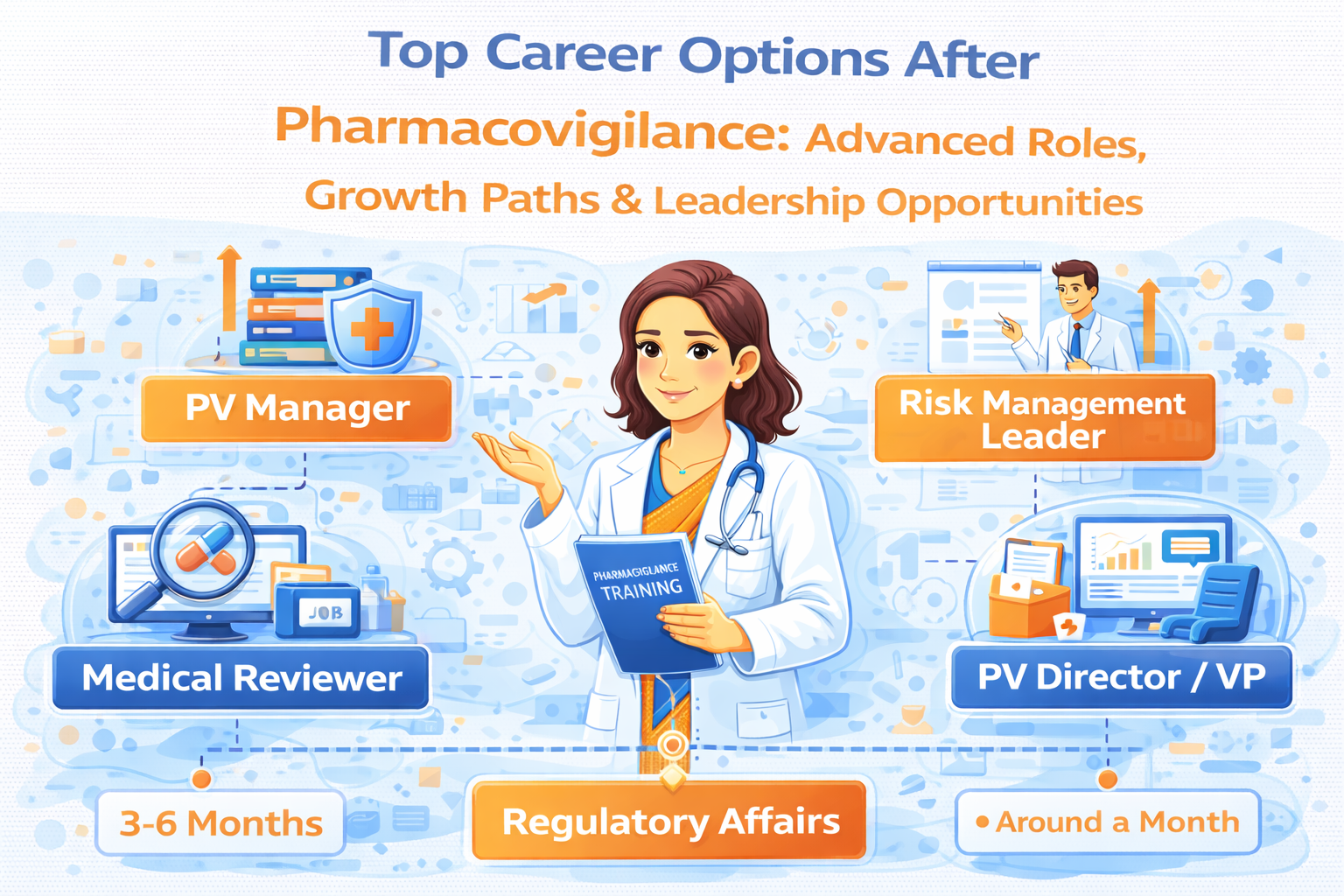
Top Career Options After Pharmacovigilance: Advanced Roles, Growth Paths & Leadership Opportunities
Pharmacovigilance is not the final stop in your career. It is the foundation.
Most professionals begin their journey after completing structured pharmacovigilance training, move into case processing, learn ICSR workflows, understand seriousness assessment, and become comfortable with regulatory timelines. After a few years, a new question emerges:
What is the next growth path?
If you have built your foundation through industry-aligned programs like Pharmacovigilance Training at ThePharmaDaily
https://thepharmadaily.com/pharmacovigilance-training
you are already positioned for vertical and horizontal career expansion.
Let us explore the most powerful career options after pharmacovigilance in a structured and strategic manner.
1. Regulatory Affairs (RA)
Regulatory Affairs is a natural transition for pharmacovigilance professionals because both functions revolve around compliance, documentation, and global health authority expectations.
After strong pharmacovigilance training, you already understand:
-
Adverse event reporting frameworks
-
Global submission timelines
-
PSUR and PBRER concepts
-
Regulatory inspection expectations
Career roles include:
-
Regulatory Affairs Associate
-
Submission Specialist
-
Global Regulatory Strategist
Your pharmacovigilance training gives you an operational understanding of safety data, which strengthens your ability to manage regulatory submissions effectively. Professionals trained through ThePharmaDaily’s pharmacovigilance training often transition smoothly into RA due to their clarity on safety compliance systems.
2. Safety Analytics and Signal Detection
If you enjoy data, patterns, and analytical reasoning, safety analytics is a high-growth pathway.
This role involves:
-
Signal detection
-
Disproportionality analysis
-
Safety data trending
-
Benefit–risk ratio evaluation
Modern pharmacovigilance training must include exposure to safety databases and analytical thinking. When your foundation is built through structured pharmacovigilance training, you understand how raw ICSRs evolve into signals and eventually into regulatory actions.
Safety analytics roles connect pharmacovigilance operations with strategic decision-making.
3. PV Quality Assurance (QA in Pharmacovigilance)
Quality Assurance within pharmacovigilance ensures that systems remain compliant and inspection-ready.
Core responsibilities include:
-
GVP compliance monitoring
-
SOP review and adherence
-
Audit preparation and participation
-
CAPA management
A professional with strong pharmacovigilance training and 2–4 years of operational experience can move into QA roles. The stronger your fundamentals in case validity, seriousness criteria, and reporting timelines, the more confident you will be during audits and inspections.
Pharmacovigilance training acts as your technical backbone in QA careers.
4. QPPV and Deputy QPPV Roles
The Qualified Person for Pharmacovigilance (QPPV) is a senior leadership milestone.
This role includes:
-
Oversight of the entire PV system
-
Regulatory authority communication
-
Risk management strategy
-
Inspection readiness supervision
To grow into this role, you need:
-
Strong pharmacovigilance training foundation
-
Extensive operational experience
-
Deep regulatory intelligence
-
Leadership capability
Professionals who invest early in structured pharmacovigilance training build clarity that accelerates long-term leadership growth.
5. SUSAR Subject Matter Expert (SME)
SUSAR expertise is highly specialized and particularly valuable in clinical trial safety.
Responsibilities include:
-
Identifying suspected unexpected serious adverse reactions
-
Evaluating causality and expectedness
-
Managing expedited reporting timelines
-
Coordinating with clinical and regulatory teams
To move into this role, your pharmacovigilance training must cover:
-
ICH guidelines
-
Clinical trial safety reporting
-
Seriousness assessment
-
Regulatory compliance requirements
SUSAR SMEs are in high demand because they bridge clinical research and pharmacovigilance.
6. PV Case Specialist or Medical Reviewer
Many professionals evolve into senior case handling roles after foundational case processing.
Advanced responsibilities include:
-
Complex case evaluation
-
Literature case processing
-
Narrative optimization
-
Quality review of junior case processors
If your pharmacovigilance training emphasized detailed narrative writing and validity assessment, you can fast-track into senior case specialist roles. Strong case specialists remain central to every pharmacovigilance system.
7. Benefit–Risk Evaluation and Risk Management
This is where pharmacovigilance shifts from operational execution to strategic impact.
Key responsibilities include:
-
Risk minimization strategy evaluation
-
Risk Management Plan (RMP) updates
-
Signal validation
-
Safety trend analysis
Benefit–risk professionals influence:
-
Label changes
-
Regulatory decisions
-
Market continuation strategies
-
Product withdrawal considerations
Strong pharmacovigilance training prepares you to interpret safety data beyond individual cases and toward population-level decision-making.
8. Decision-Making and Leadership Roles
With experience and a strong pharmacovigilance training foundation, professionals can grow into:
-
Pharmacovigilance Manager
-
Global Safety Lead
-
Head of Pharmacovigilance
-
Safety Strategy Consultant
Leadership requires:
-
Operational clarity
-
Regulatory intelligence
-
Risk-based thinking
-
Strategic communication
This is why structured pharmacovigilance training from the beginning matters. Your growth speed depends on how strong your base is.
If you are planning long-term progression, strengthening your foundation through comprehensive
Pharmacovigilance Training at ThePharmaDaily
https://thepharmadaily.com/pharmacovigilance-training
is a strategic first step.
How to Choose the Right Path After Pharmacovigilance?
Before making your next move, ask yourself:
-
Do I enjoy compliance or analytics?
-
Do I prefer operational execution or strategic oversight?
-
Do I want specialization or leadership growth?
-
Do I see myself influencing regulatory decisions in the future?
Your career should not evolve accidentally. It should evolve intentionally.
If your fundamentals are strong through structured pharmacovigilance training, every path becomes accessible—regulatory affairs, QA, analytics, SUSAR expertise, benefit–risk evaluation, or leadership.
Final Perspective
Pharmacovigilance is not just about case processing. It is about protecting patient safety globally.
The career options after pharmacovigilance are diverse, high-impact, and globally relevant. The difference between slow growth and accelerated growth lies in how solid your pharmacovigilance training foundation is.
If you are ready to design your next career move strategically, explore
Pharmacovigilance Training at ThePharmaDaily
https://thepharmadaily.com/pharmacovigilance-training
Build the base. Strengthen the expertise. Step into the next level with clarity.
Your growth in pharmacovigilance does not stop here. It expands.