 Sign in with Google


Pharmacovigilance Training in 2026: Complete Career Roadmap, Skills & Placement Reality
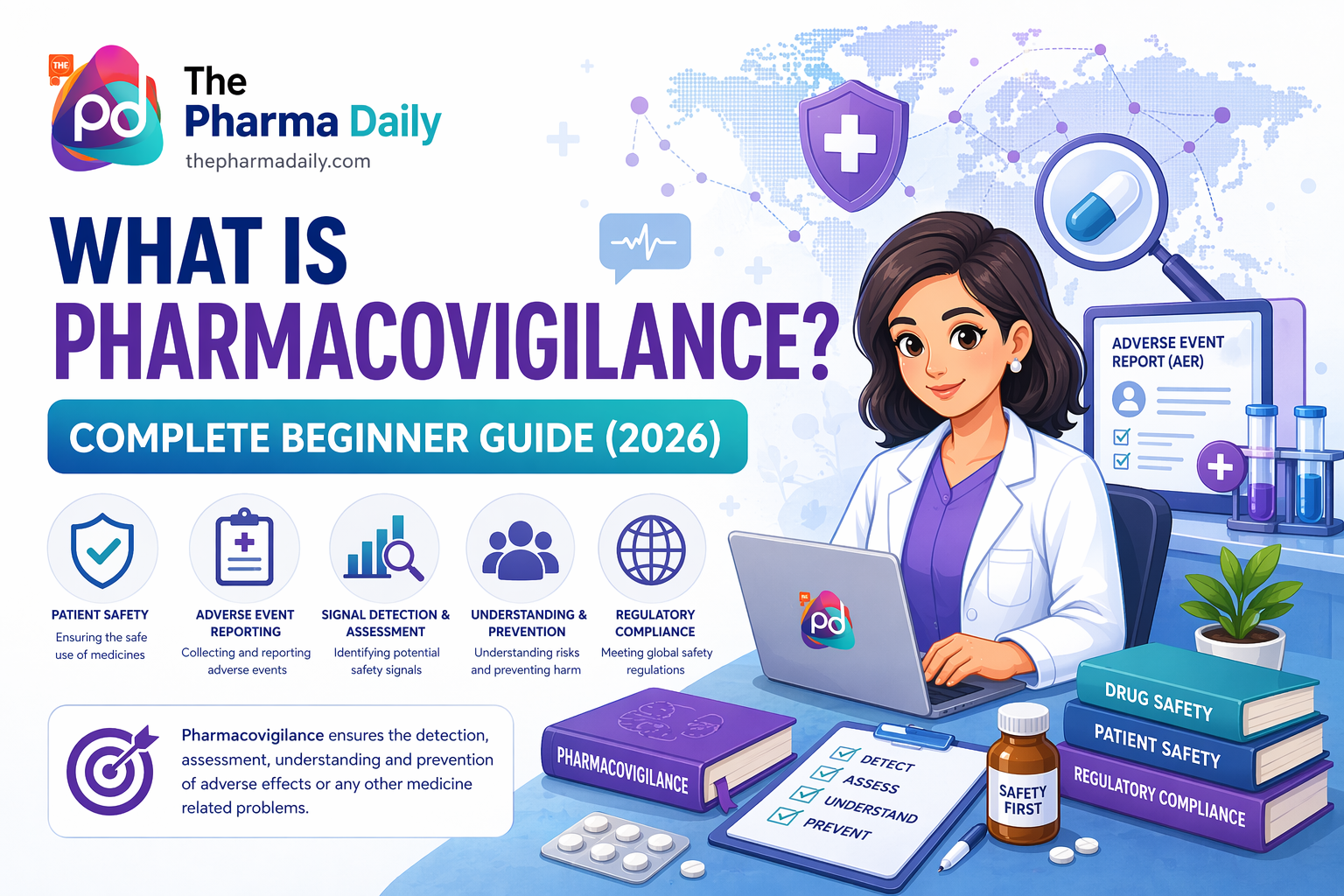
As we enter 2026, the pharmaceutical and life sciences industry is no longer driven only by drug discovery and innovation. The real focus has shifted toward patient safety, regulatory accountability, and continuous risk monitoring. At the center of this shift lies pharmacovigilance.
For anyone planning a long-term, non-clinical career in pharma, one truth is now undeniable:
In 2026, pharmacovigilance training is not optional—it is the entry ticket.
At ThePharmaDaily, we work closely with students, freshers, and working professionals across India, and the same questions keep coming up:
-
Is pharmacovigilance still a good career in 2026?
-
Does pharmacovigilance training really matter?
-
What skills do companies actually expect today?
-
Is AI a threat to pharmacovigilance jobs?
This blog answers all of that—honestly, practically, and with industry reality.
Why Pharmacovigilance Matters More Than Ever in 2026?
Pharmacovigilance in 2026 is no longer a backend compliance function. It has become a strategic pillar for pharmaceutical companies, CROs, and regulatory authorities worldwide.
Three major forces are driving this shift:
1. Stricter Global Regulations
Regulatory authorities such as the FDA, EMA, MHRA, and CDSCO are enforcing tighter timelines, higher data quality expectations, and deeper safety analysis. Errors in safety reporting are no longer tolerated as “learning gaps.”
2. Explosion of Real-World Data
Post-marketing surveillance, real-world evidence, patient registries, and digital health platforms generate massive volumes of safety data. This data must be analyzed, coded, assessed, and reported accurately.
3. Technology & AI Integration
Automation and AI are being introduced to support pharmacovigilance processes—not replace humans. However, professionals who lack structured pharmacovigilance training struggle to adapt.
This is why companies today hire trained pharmacovigilance professionals, not raw graduates.
Is Pharmacovigilance a Good Career in 2026? (The Honest Reality)
Yes—pharmacovigilance is a very strong career in 2026, but the rules have changed.
Earlier, many candidates entered pharmacovigilance roles through generic clinical research courses or basic certifications. In 2026, that route rarely works.
The current reality:
-
Recruiters do not train from scratch
-
Certificates alone do not impress interviewers
-
Interviews are case-based and scenario-driven
-
Practical understanding matters more than theory
Candidates who have completed hands-on pharmacovigilance training perform significantly better in interviews and on the job. This is exactly why ThePharmaDaily’s pharmacovigilance training focuses on real workflows, real timelines, and real decision-making—not just definitions.
Learn more about the program here: https://thepharmadaily.com/pharmacovigilance-training
Why Pharmacovigilance Training Is Mandatory in 2026?
In 2026, pharmacovigilance roles are skill-gated.
You are expected to already know:
- How to assess ICSR validity
- How to evaluate seriousness, expectedness, and causality
- Which MedDRA term to select—and why
- What the regulatory reporting timelines are
- How narratives are structured for regulators
- How safety data flows between PV systems
Without structured pharmacovigilance training, candidates struggle even in the first interview round. That is why industry-oriented pharmacovigilance training is now considered mandatory, not optional.
Skills Recruiters Expect After Pharmacovigilance Training in 2026
In interviews, recruiters are not testing memory—they are testing judgment.
A strong pharmacovigilance training program must prepare you for:
- End-to-end ICSR processing
- Case validity assessment
- MedDRA coding (LLT → PT logic)
- Narrative writing aligned with regulatory standards
- Global reporting timelines (7/15/30 days)
- Follow-up management
- Quality checks and audit readiness
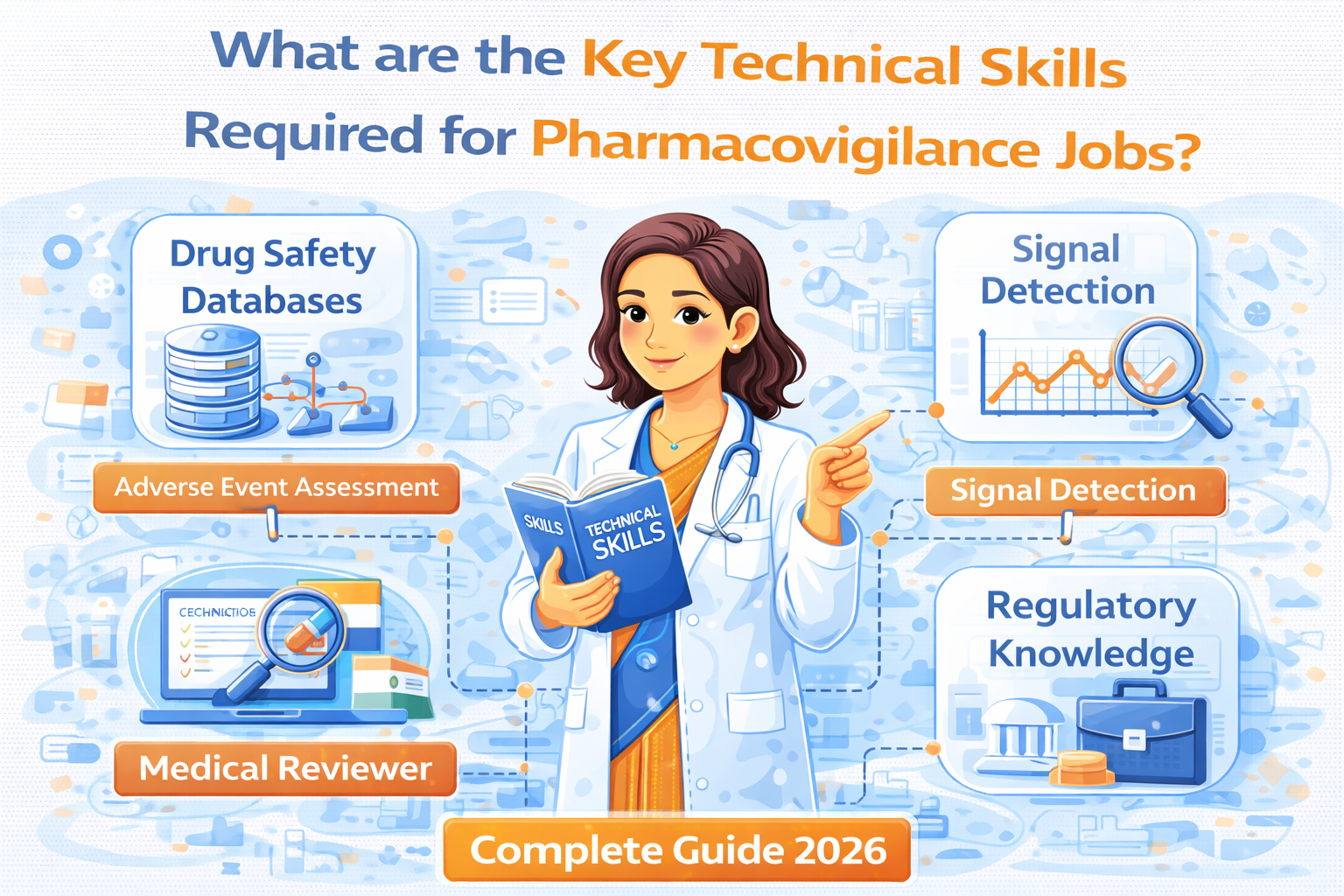
- Basic exposure to aggregate reports and signal concepts
At ThePharmaDaily, pharmacovigilance training is designed around how work actually happens in CROs and pharma companies, which is why learners gain confidence early.
AI in Pharmacovigilance: Threat or Career Accelerator?
This is the biggest fear in 2026—and the biggest misunderstanding.
AI is not replacing pharmacovigilance professionals.
AI is replacing untrained and outdated professionals.
Modern pharmacovigilance training must include:
- AI-assisted case triaging
- Automation in data extraction
- Decision-support tools for signal prioritization
- Dashboards for safety metrics
Professionals who understand both pharmacovigilance fundamentals and AI-enabled workflows will dominate the job market. This is why ThePharmaDaily integrates AI into pharmacovigilance training, preparing learners for the future rather than the past.
Pharmacovigilance Salary & Career Growth in India (2026)
After completing proper pharmacovigilance training, salary growth is stable and predictable.
Typical salary ranges in India:
-
Freshers: ₹4–6 LPA
-
2–4 years experience: ₹8–12 LPA
-
Specialized roles (signals, aggregates, QA): ₹15 LPA and above
What drives salary growth is not just experience—but quality of pharmacovigilance training and role readiness. Candidates trained through ThePharmaDaily often perform better because they are evaluated on real case logic, not surface knowledge.
How to Choose the Right Pharmacovigilance Training in 2026?
Before enrolling anywhere, ask yourself:
- Does the pharmacovigilance training include hands-on case processing?
- Are MedDRA, narratives, and timelines taught practically?
- Is AI discussed only theoretically—or actually demonstrated?
- Do trainers have real industry experience?
- Is interview preparation structured and role-specific?
If the answer to most of these is “no,” the training will not help you clear interviews. This is where ThePharmaDaily’s pharmacovigilance training stands out.
Explore the program here: https://thepharmadaily.com/pharmacovigilance-training
Placement Reality: What Actually Gets You Hired
Recruiters do not ask:
- Which institute you studied from
- How many certificates you have
They ask:
- How would you assess this case?
- Which MedDRA PT would you select?
- What is the reporting timeline here?
- Can you write a compliant narrative?
This is why placement-focused pharmacovigilance training matters more than branding.
At ThePharmaDaily, placement preparation includes:
- Case-based mock interviews
- Interview question banks
- Resume and LinkedIn optimization
- Last-minute interview preparation kits
Final Career Advice for 2026 Aspirants
Pharmacovigilance in 2026 is not overcrowded. It is under-trained.
The demand is real. The opportunities are global.
But success depends on how aligned your pharmacovigilance training is with industry reality. That gap is exactly what ThePharmaDaily was created to fill.
Ready to Build a Career in Pharmacovigilance?
If you are looking for industry-ready pharmacovigilance training in India, with AI exposure, real case handling, and serious placement preparation—
Start here: https://thepharmadaily.com/pharmacovigilance-training