 Sign in with Google


How to Get Pharmacovigilance Jobs for Freshers in India? | Complete Guide
Introduction: Why Pharmacovigilance Has Become the Top Career Choice for Freshers
Every year in India, thousands of pharmacy and life science graduates complete their degrees with one major concern — getting their first job in the pharmaceutical industry.
Traditional domains such as production, quality control, quality assurance, and medical sales are either saturated or require factory exposure, night shifts, or aggressive targets. At the same time, global pharmaceutical companies are facing increasing pressure from regulatory authorities to strengthen patient safety systems.
This shift has created one of the fastest-growing career opportunities in India: pharmacovigilance.
Pharmacovigilance is no longer a small compliance department. It is now a global, technology-driven, regulation‑critical function operating across clinical trials, post‑marketing surveillance, risk management, and real‑world safety monitoring.
India has become the preferred global hub for pharmacovigilance operations due to its skilled workforce and strong regulatory knowledge base. As a result, hiring for pharmacovigilance jobs for freshers has increased consistently over the past decade.
With structured pharmacovigilance training, freshers with no industry experience can successfully enter multinational pharmaceutical companies, CROs, biotech firms, and global safety service providers.
What Is Pharmacovigilance? A Simple Explanation for Freshers
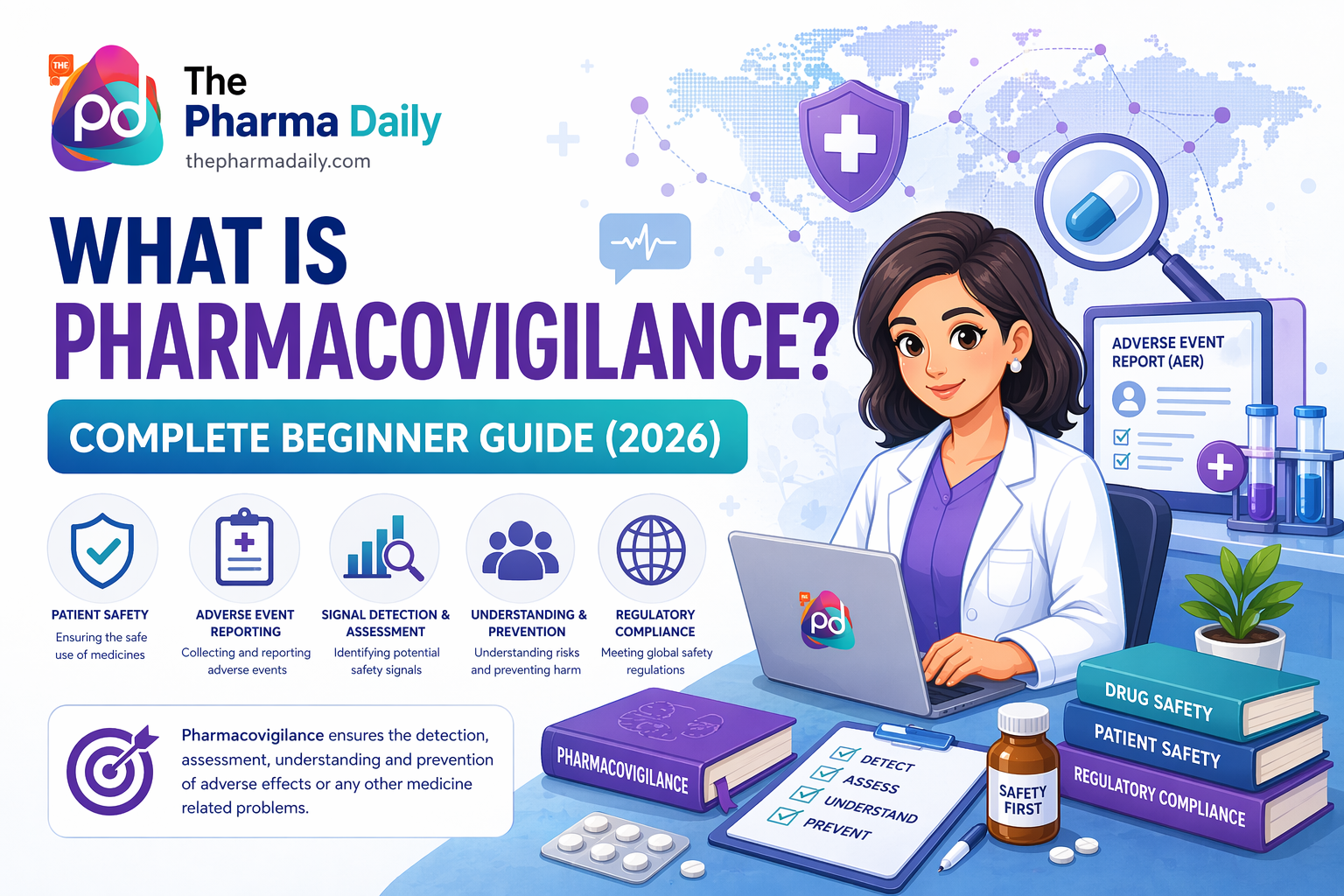
Pharmacovigilance is the science and practice of monitoring the safety of medicines after they are administered to patients.
According to the World Health Organization, pharmacovigilance focuses on:
-
Detection of adverse drug reactions
-
Assessment of safety information
-
Understanding risks associated with medicines
-
Prevention of future harm to patients
In real industry practice, pharmacovigilance professionals are responsible for:
-
Collecting adverse event reports from multiple sources
-
Reviewing medical information and patient details
-
Evaluating seriousness and expectedness
-
Writing medically accurate case narratives
-
Submitting safety reports to global health authorities
-
Continuously monitoring benefit–risk profiles of medicines
From the first dose administered in clinical trials until the drug is withdrawn from the market, pharmacovigilance remains active throughout the entire product life cycle.
This permanent regulatory requirement is the reason pharmacovigilance offers long‑term career stability.
Why Pharmacovigilance Is an Ideal Career Option for Freshers
Pharmacovigilance offers several advantages that make it highly suitable for entry‑level professionals.
Entry-Level Friendly Domain
Pharmacovigilance roles are knowledge-based rather than experience-based. Companies invest in training freshers who demonstrate strong conceptual understanding and regulatory awareness.
No Laboratory or Manufacturing Exposure Required
The role is completely office-based and does not involve wet lab work, chemical handling, or manufacturing shifts.
Global Regulatory Exposure
Professionals work with international guidelines such as:
-
USFDA regulations
-
European Medicines Agency (EMA)
-
MHRA (United Kingdom)
-
ICH guidelines
-
WHO safety standards
Strong Career Stability
Pharmacovigilance is a mandatory function under global drug laws. It cannot be eliminated, even during market slowdowns.
Clear Long-Term Growth Path
Career progression includes safety scientist roles, aggregate reporting, signal detection, and risk management.
All these advantages become accessible with proper pharmacovigilance training.
Pharmacovigilance Jobs for Freshers in India
Below are the most common entry‑level pharmacovigilance job roles available in India.
Drug Safety Associate (DSA)
This is the most widely hired fresher position.
Key responsibilities include:
-
Intake and triage of adverse event reports
-
Review of source documents
-
Data entry into safety databases
-
Identification of missing information
-
Drafting follow‑up queries
-
Performing quality checks
Most freshers begin their pharmacovigilance career in this role.
Pharmacovigilance Associate
Responsibilities include:
-
Individual Case Safety Report (ICSR) processing
-
Validity assessment
-
Seriousness determination
-
Expectedness evaluation
-
MedDRA adverse event coding
-
WHO Drug Dictionary coding
-
Medical narrative writing
Strong conceptual clarity is essential, which is why structured pharmacovigilance training is critical.
Clinical Safety Associate
This role focuses on clinical trial safety.
Responsibilities include:
-
SAE case processing
-
SUSAR reporting
-
Interaction with clinical teams
-
Investigator follow‑up communication
-
Clinical safety database management
This role is particularly suitable for PharmD and clinical research graduates.
Safety Data Analyst
Responsibilities include:
-
Literature screening
-
Identification of reportable cases
-
Line listing preparation
-
Medical review support
Argus / ARISg / Oracle Safety Executive
Responsibilities include:
-
Handling safety databases
-
Case lifecycle tracking
-
Workflow navigation
-
Regulatory submission readiness
Database familiarity gained during pharmacovigilance training significantly improves employability.
Educational Eligibility for Pharmacovigilance Jobs
Candidates from the following backgrounds are eligible:
-
B.Pharm and M.Pharm
-
PharmD
-
BSc / MSc Life Sciences
-
Biotechnology
-
Clinical Research
-
MBBS, BDS, BAMS, BHMS
Many healthcare professionals transition successfully into pharmacovigilance through professional pharmacovigilance training programs.
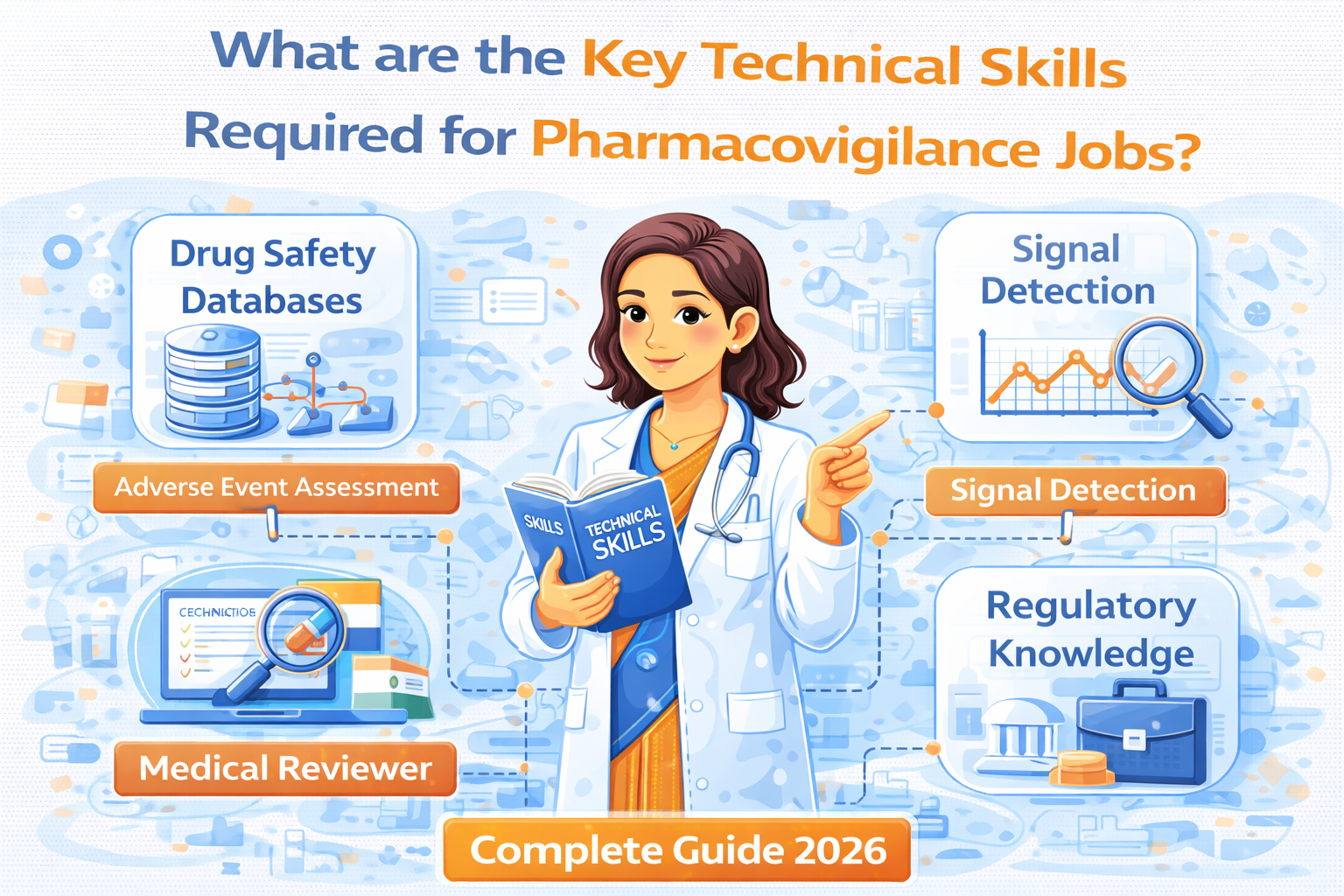
Core Skills Required for Pharmacovigilance Freshers
Technical Knowledge
Freshers must clearly understand:
-
Individual Case Safety Reports
-
Four validity criteria
-
Seriousness versus severity
-
Expectedness assessment
-
Causality concepts
-
Follow‑up strategy
-
Day 0 concept
-
Global reporting timelines
Coding Knowledge
-
MedDRA hierarchy and coding rules
-
WHO Drug Dictionary structure
Regulatory Knowledge
-
ICH E2A, E2B, E2C, E2D
-
EU GVP modules
-
USFDA post‑marketing requirements
These competencies are systematically taught during ThePharmaDaily pharmacovigilance training.
Pharmacovigilance Software Knowledge
Commonly used safety databases include:
-
Argus Safety
-
ARISg
-
Vigisolvo
-
Vigiflow
-
FAERS
-
Eudravigilance
While companies provide on‑job training, prior exposure through pharmacovigilance training gives a strong interview advantage.
Salary of Pharmacovigilance Freshers in India
Average salary structure:
-
Entry-level freshers: INR 2.5 – 4.5 LPA
-
1–3 years experience: INR 5 – 8 LPA
-
4–7 years experience: INR 10 – 18 LPA
-
Global safety specialists: INR 20 – 30+ LPA
Salary growth depends heavily on regulatory expertise, case quality, and database proficiency.
Why Many Freshers Fail to Get Pharmacovigilance Jobs?
Common gaps include:
-
Inadequate understanding of case validity
-
Poor seriousness justification
-
Weak narrative writing skills
-
Confusion between AE and SAE
-
No clarity on timelines and Day 0
-
Only theoretical learning without case practice
Professional pharmacovigilance training bridges this gap between education and industry expectations.
Why Choose ThePharmaDaily Pharmacovigilance Training?
ThePharmaDaily is one of India’s leading platforms dedicated exclusively to pharma career development.
The pharmacovigilance training program focuses on:
-
Real‑time ICSR case discussions
-
Long narrative writing practice
-
Seriousness and validity mastery
-
Regulatory guideline interpretation
-
Database workflow understanding
-
Resume development for freshers
-
Interview preparation with real questions
-
Career guidance and job support
Official training page:
https://thepharmadaily.com/pharmacovigilance-training
How ThePharmaDaily Helps Freshers Become Industry‑Ready?
Students trained under ThePharmaDaily pharmacovigilance training develop:
-
Strong conceptual foundation
-
Confidence in explaining cases
-
Practical workflow understanding
-
Regulatory mindset required by employers
-
Professionally structured resumes
This industry readiness significantly improves interview success rates.
Learn more:
https://thepharmadaily.com/pharmacovigilance-training
Resume Tips for Pharmacovigilance Freshers
A strong pharmacovigilance resume must include:
-
Safety-related keywords
-
ICSR terminology
-
Coding exposure
-
Regulatory guideline knowledge
-
Training certification
An effective PV resume clearly communicates the ability to handle cases independently.
Common Pharmacovigilance Interview Questions
-
What is pharmacovigilance?
-
What are the four validity criteria?
-
Difference between AE and SAE?
-
What is Day 0?
-
What is MedDRA?
-
What is expectedness?
-
Explain seriousness criteria.
-
What is a follow‑up?
All these areas are comprehensively covered during ThePharmaDaily pharmacovigilance training.
Career Growth After Pharmacovigilance
With experience, professionals can grow into:
-
Senior Drug Safety Associate
-
Team Lead
-
Safety Scientist
-
Signal Detection Analyst
-
Aggregate Reporting Specialist
-
Risk Management Professional
-
Global Safety Manager
Pharmacovigilance offers one of the most stable and globally transferable careers in the pharmaceutical industry.
Final Conclusion
For freshers seeking entry into the pharmaceutical industry, pharmacovigilance remains one of the most reliable and rewarding career options in India.
With structured pharmacovigilance training, real case exposure, and regulatory clarity, fresh graduates can confidently secure their first pharma job.
Thousands of professionals have already built successful global careers through ThePharmaDaily.
Begin your journey today through industry‑focused pharmacovigilance training:
https://thepharmadaily.com/pharmacovigilance-training
Published by ThePharmaDaily – Empowering Global Careers in Pharmacovigilance