 Sign in with Google

Generative AI Tools and Skills Required for Pharmacovigilance Jobs in India
Discover the technical and soft skills required for pharmacovigilance jobs in India, including Generative AI tools like ChatGPT, Gemini, Perplexity AI, Grok, Power BI, GPTs, and regulatory knowledge. Learn how pharmacovigilance training from ThePharmaDaily helps you become job-ready in the AI era.
Introduction: Pharmacovigilance Is Entering the AI Era
The pharmacovigilance industry is undergoing a massive transformation.
What was once a field driven mainly by manual case processing, Excel trackers, and narrative writing is now rapidly integrating Generative Artificial Intelligence (Gen AI), automation platforms, advanced analytics, and real-time signal detection systems.
Today, recruiters hiring for pharmacovigilance jobs in India are no longer looking only for candidates who understand adverse event reporting. They are actively searching for professionals who possess:
-
Strong regulatory knowledge
-
Hands-on pharmacovigilance training
-
Familiarity with Generative AI tools
-
Data analytics skills
-
Technology-driven safety workflow understanding
This shift is redefining how safety professionals work—and how newcomers must prepare.
In this blog, we will break down all the essential Gen AI tools and skills required for pharmacovigilance jobs in India, along with how structured pharmacovigilance training from ThePharmaDaily prepares candidates for this evolving landscape.
Why Generative AI Matters in Pharmacovigilance?
Pharmacovigilance deals with massive volumes of unstructured safety data such as:
-
Patient narratives
-
Medical literature
-
Spontaneous adverse event reports
-
Social media signals
-
Clinical trial safety data
Generative AI helps safety teams:
-
Draft high-quality narratives
-
Perform literature screening
-
Identify duplicate cases
-
Support MedDRA coding logic
-
Assist in signal detection
-
Improve aggregate report preparation
-
Reduce manual processing time
Global pharma companies are now embedding AI into their safety ecosystems, making AI literacy a must-have skill rather than an optional advantage.
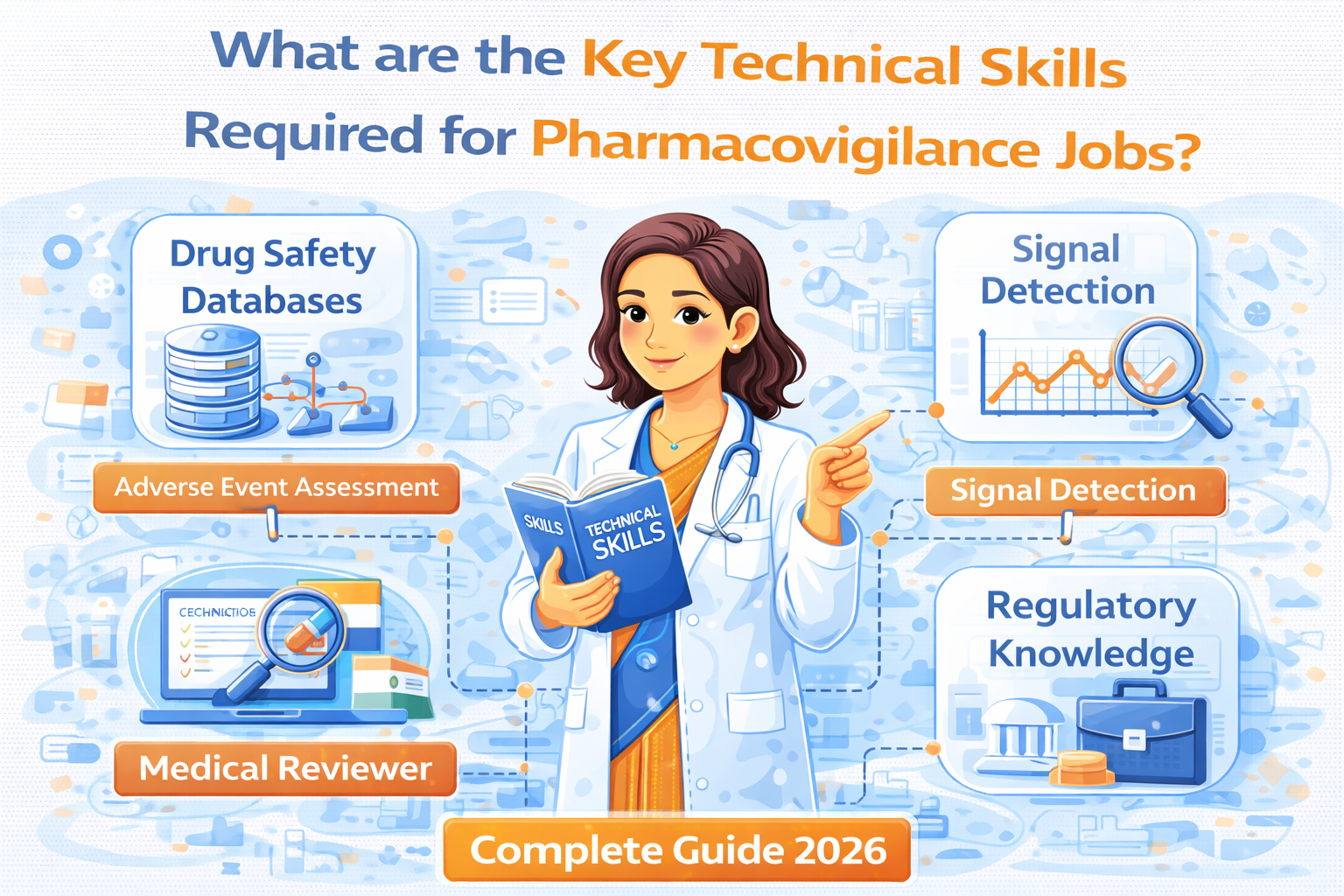
Core Technical Skills Required for Pharmacovigilance Jobs
Before exploring AI tools, every candidate must first master the fundamentals through proper pharmacovigilance training.
1. Regulatory Knowledge
Strong understanding of:
-
ICH E2A, E2B(R3), E2C(R2), E2D
-
GVP Modules (EU)
-
US FDA regulations
-
CDSCO pharmacovigilance guidelines
-
Individual Case Safety Reports (ICSRs)
-
Expedited reporting timelines
-
SUSARs, SAEs, and non-serious cases
Without regulatory grounding, AI tools cannot be applied correctly.
This is why structured pharmacovigilance training at thepharmadaily emphasizes regulations before automation.
2. ICSR Case Processing Skills
Essential skills include:
-
Case validity assessment
-
Seriousness assessment
-
Expectedness evaluation
-
Causality assessment
-
Narrative writing
-
MedDRA and WHODrug coding
-
Follow-up management
AI can support these processes—but only trained professionals can validate and interpret outputs.
Generative AI Tools Required for Pharmacovigilance Professionals
Below are the most relevant Generative AI tools currently impacting pharmacovigilance jobs in India.
1. ChatGPT (OpenAI)
One of the most widely used Gen AI tools in pharmacovigilance.
Used for:
-
Drafting patient narratives
-
Grammar improvement for narratives
-
Medical terminology clarification
-
Case summary structuring
-
SOP understanding
-
Training simulations
Advanced pharmacovigilance professionals use custom GPTs trained on safety workflows.
Pharmacovigilance training at ThePharmaDaily includes practical guidance on using ChatGPT responsibly under regulatory compliance.
2. Google Gemini
Gemini is increasingly used for:
-
Medical literature interpretation
-
Comparative regulatory research
-
Safety signal background review
-
Multi-document summarization
Its strength lies in cross-source reasoning, useful for aggregate reporting and safety reviews.
3. Perplexity AI
Perplexity is a research-based AI tool ideal for:
-
Literature screening
-
Signal detection background research
-
Regulatory reference searches
-
Safety topic exploration
It provides cited sources, which is extremely useful in pharmacovigilance documentation.
4. Grok AI
Grok supports:
-
Real-time data interpretation
-
Trend identification
-
Pattern recognition
-
Safety discussions monitoring
Although still evolving, it is gaining attention in post-marketing surveillance activities.
5. Claude AI
Claude is widely used for:
-
Long narrative refinement
-
PBRER and PSUR language enhancement
-
Aggregate report drafting assistance
-
Compliance-friendly content generation
Many global safety teams use Claude for structured documentation workflows.
6. Elicit AI
A research-focused AI tool used for:
-
Scientific paper screening
-
Evidence extraction
-
Literature review automation
-
Signal management research
Highly valuable for safety physicians and PV scientists.
7. Scite AI
Used for:
-
Literature credibility evaluation
-
Citation-based evidence assessment
-
Supporting risk-benefit analysis
Increasingly relevant for regulatory writing roles.
Power BI and Data Analytics Tools in Pharmacovigilance
Modern pharmacovigilance roles now demand data visualization skills.
Power BI Skills Include:
-
Safety trend dashboards
-
Line listings visualization
-
Case volume analysis
-
Country-wise reporting trends
-
Signal trend mapping
Power BI is used in:
-
Signal detection
-
Risk management
-
Management safety reviews
Pharmacovigilance training at thepharmadaily introduces analytics concepts so candidates understand how safety data flows beyond case processing.
Additional Technical Tools Used in PV Industry
Candidates should also be aware of:
-
Argus Safety
-
ArisG
-
Veeva Vault Safety
-
Oracle Siebel
-
MedDRA Browser
-
WHODrug Global
-
Safety databases and reconciliation tools
AI tools enhance these systems but do not replace domain expertise.
Soft Skills Required Along With AI Knowledge
Technology alone is not enough.
Recruiters consistently prioritize:
Communication Skills
-
Clear narrative writing
-
Medical accuracy
-
Regulatory language precision
Analytical Thinking
-
Case interpretation
-
Logical seriousness assessment
-
Clinical reasoning
Attention to Detail
-
Zero tolerance for data errors
-
Compliance accuracy
Adaptability
-
Learning new AI tools
-
Understanding evolving regulations
This blend of human intelligence and artificial intelligence defines the future pharmacovigilance professional.
Why Pharmacovigilance Training is Essential Before Learning AI?
Many candidates make the mistake of learning AI tools without understanding pharmacovigilance fundamentals.
This often leads to:
-
Incorrect seriousness classification
-
Invalid narratives
-
Regulatory non-compliance
-
Poor interview performance
Proper pharmacovigilance training ensures that AI tools are used as assistants—not decision makers.
At ThePharmaDaily, pharmacovigilance training is designed to:
-
Build strong regulatory foundations
-
Teach real industry workflows
-
Integrate Gen AI practically
-
Prepare candidates for interviews
-
Make learners job-ready from Day 1
You can explore the complete pharmacovigilance training program here:
https://thepharmadaily.com/pharmacovigilance-training
Career Roles Where Gen AI Skills Add Value
AI knowledge enhances performance in roles such as:
-
Pharmacovigilance Associate
-
Drug Safety Associate
-
Case Processing Specialist
-
Safety Data Analyst
-
Signal Detection Analyst
-
Aggregate Report Writer
-
PV Scientist
-
Risk Management Specialist
Candidates with AI exposure stand out strongly during interviews.
Future of Pharmacovigilance Jobs in India
India is becoming a global hub for:
-
Case processing
-
Signal management
-
Aggregate reporting
-
Medical review support
-
Safety analytics
With increasing outsourcing from US and EU markets, professionals trained in:
-
Pharmacovigilance regulations
-
Generative AI tools
-
Safety databases
-
Data analytics
will dominate hiring trends for the next decade.
Final Thoughts
Pharmacovigilance is no longer just about processing cases.
It is about combining:
-
Regulatory intelligence
-
Clinical understanding
-
Data interpretation
-
Generative AI tools
-
Continuous learning
Candidates who invest in structured pharmacovigilance training and learn how to use AI responsibly will lead the future of drug safety.
If you are planning to enter or grow in pharmacovigilance, now is the time to upgrade your skills with industry-oriented training from ThePharmaDaily.
Start your professional journey here:
https://thepharmadaily.com/pharmacovigilance-training